Grace Under Fire

Blog

  • Life After Loss

    What do you do after you have suffered a great loss? Do you get angry at the world? Shut everyone out and become a hermit, isolate in an attempt to keep yourself from further harm? Maybe you move on, pretending nothing happened. Bury your emotions down deep to where they no longer are at the surface, begging to be felt. Maybe you do the healthy thing and process through your emotions, do some journaling and heart healing work.

    Up until the year of 2025, I would have told you that I had handled loss fairly well. Not in a super toxic way but I had felt the feelings, forgiven the offenders, and moved forward. I had done some heart work in the previous years to learn to let go of the hurts that I had carried with me for so long. I was working on forgiving myself, loving myself.

    Up until 2025, that is.

    The first few days of the year felt like any other year. They didn’t seem to be out of the ordinary or special in any way.

    That is, until February began. In the span of just a few short weeks, my world completely turned upside down.

    I went from living a missionary life in Latvia, Europe, back to living a “normal” life in America with a job, a car, and living with my parents. In the process of moving back to America I lost the friendship of people I had worked closely with for the previous 5 years.

    It felt like my life was now void of purpose and meaning.

    On top of the drama surrounding my exit from Europe, two of my friends died. One was found murdered in her home with her husband, the other died after a two year long battle against cancer. The second one, I had known for 19 years.

    How does a person recover from such loss?

    A couple of weeks ago I was having some imaginary conversations in my head while vacuuming at my job. I asked the other person in my fake conversation: “how would you handle such betrayal at the hands of friends?”

    Quietly, I felt God speak to me, “I washed Judas’ feet.”

    If you’re not familiar with the story, Judas betrayed Jesus for thirty pieces of silver. Judas was a disciple and close friend of Jesus. God knows everything we will ever do, and Jesus had that knowledge, as God was wrapped in flesh. He knew that Judas would betray him, and yet He still welcomed Judas with open arms and love in His heart. Jesus still chose to serve Judas, even with betrayal on the horizon.

    The conviction I felt at the words of God was heavy.

    I am not God, I could never be an equal to him. I don’t possess His knowledge or power or sovereignty.

    Who am I, that I think I could get away with not loving the people that hurt me the most?

    Who am I, that I think I can just spend the rest of my days wallowing in self pity?

    The highest honor and calling I will ever fulfill is to love those people who hurt me. That is when I am most like Christ.

    So what can I do after experiencing such a great loss in my life?

    Love.

    Love myself. Love people.

    Believe in the power and healing of love, especially the love of God.

    I cannot afford to harbor myself away to lick my wounds. Yes, I must address what happened and process how it made me feel. I must take the time to grieve.

    However, I cannot let grief kill me. Grief is a part of the story, but it’s not the whole thing. When grief is left unchecked, it can quickly become bitterness and resentment. Isolation.

    Things may look dark and dreary now, but they will not always stay this way.

    Life will go on, and I must move forward.

  • Moving Forward

    “I’m just moving on. It’s their loss.”

    How many times have you heard this regarding a situation where there has been a broken relationship? Maybe even a bad situation where everyone lost, there was no clear winner. Maybe you have even spoken these same words.

    I have found myself saying them a lot lately as I learn to navigate this new life I have. Life after loss.

    That is, until I began a journey of forgiveness.

    I began to read this book “Forgiving What You Can’t Seem to Forget,” by Lisa TerKeurst. No, this is not a paid advertisement for the book although I do recommend for anyone that has been through significant trauma. The book also has a companion journal that you fill out as you read the book.

    Mind you, I had already listened to the audion version of the book before I even had this situation happen. In fact, I was finishing listening to the audio version right before everything happened. I found myself in a position of needing to forgive.

    I needed to forgive others, but more importantly, I needed to forgive myself.

    I am going through the book with some trusted friends. Going through the process of learning how to heal from our own traumas together, offering support to each other. I highly recommend having a support group, people who will listen to you without judgment and help you navigate your pain as you try to make sense of it all.

    We’ve only read the introduction and the first two chapters so far, but there has been so much good stuff that has been said. I have felt as if the author peeked into my heart and mind, transcribing my thoughts onto the pages.

    For example: I learned that using the phrase “I’m just going to move on,” is a coping mechanism. It’s what we use to avoid confronting what is happening inside of us. The messy emotions, the dark thoughts, the guilt and shame we carry but never talk about.

    I was a little shocked to find that my go-to phrase was not actually working for me. That instead being elevated beyond pain I was avoiding it.

    What?

    The more I read, the more it made sense. It’s why I have years of things to unpack, things to heal from.

    I have spent most of my life avoiding the things that have happened to me and how they made me feel.

    Instead of moving on, I was simply stunting myself. Creating an emotional dwarf inside of me. Physically, I aged, but mentally and emotionally, I was a toddler.

    I had become a professional at hiding how I was doing on the inside. On the oustide I was cool, calm and collected. On the inside was a little girl version of me that didn’t know how to handle everything that ever happened to her. She just wanted to feel safe again.

    I wanted to feel safe and loved and whole again.

    Now what?

    If saying “I’m just moving on” is a coping mechanism, then what was I supposed to do?

    I learned that instead of simply moving on, I need to MOVE FORWARD.

    What does that look like?

    Doing the hard work of sitting down and processing what happened, understanding how it made me feel. Give myself room to grieve properly. Unload the burden of shame and guilt. Stop assuming the blame for everything that happened to or around me like it was my fault.

    It’s not always my fault, but it is my fight.

    It’s my fight to move forward.

    To no longer bury what I am feeling or thinking, to give myself space and grace to exist. To stop trying to take care of everyone else and neglecting my own needs.

    Now, I am moving forward.

  • Change of Direction

    I think almost every person has been on a road trip. You start out in the car with your snacks, GPS loaded and an idea of where you’re headed. The vision for the adventure ahead is clear in your mind. Off you ride into the sun, fully embracing what lies ahead.

    Somewhere along the way, between dropped GPS signals and missed exits you find yourself with no idea of where you are going. That little voice from the GPS system comes on “recalculating.” It’s reminding you that you have left the previous course of direction and are heading in a new way. Maybe it’s a source of shame for you, reminding you that once again you have failed. Maybe it excites you, because you are approaching new territory. Maybe it’s just a source of frustration, an inconvenience. Life will be just fine again if only you can get that little voice to shut up.

    Sound familiar?

    For me it does.

    I recall in the spring of 2010 when I took my one and only spring break trip during my life. My sister and I loaded up the car and drove the 10 hours to Santa Fe, New Mexico. We started in the early morning so we could beat the traffic.

    Somewhere in Oklahoma we found ourselves being told that the GPS was recalculating our direction and route. According to the GPS we were offroading. The reality is that we were driving along the new highway that was still being finished. We had followed the directions, and the directions said we were wrong.

    Imagine our frustration at the little box that had put us in our current predicament. Why did it not recognize where we were?

    Earlier this year, I found myself in a change of direction and recalculation. I had followed the steps, listened to the directions. Yet I found myself offroading in life.

    I was lost.

    I had made so many plans for myself in 2025, everything was planned down to the month. I knew what to expect from the year.

    Somewhere between the planning and the execution, I stumbled upon a change of direction.

    The change of direction brought along a new job, a new life, a new hurt.

    At first, I was very angry and frustrated. Especially at God. I knew what I was supposed to be doing, what I was called to do. At the last minute God called an audible and shifted the course of my life. He asked me to trust Him, and I did. I still do. However, for quite some time I was hurting and angry.

    I didn’t understand fully why God wanted to change my direction. Part of it, I still don’t understand.

    But I do know this:

    This year has been nothing I wanted but it HAS been everything that I needed.

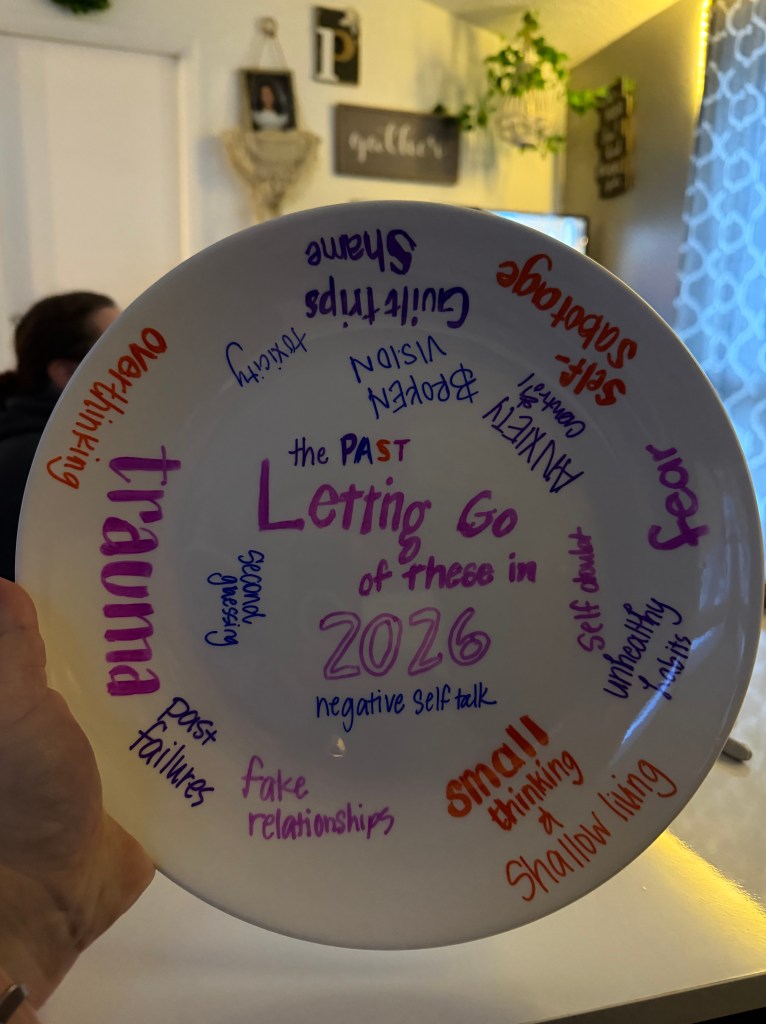
    I have endured much heartache and pain in my life. I have broken myself to fit into molds and to please people only to have them walk away. I have carried the pain for far too long, and now I am learning to let go.

    I am learning to heal.

    I am learning to walk away from the expectations of people and live for myself.

    Sometimes, a change of direction is not such a bad thing.

    What will you do with the change of direction that comes your way?

  • Remove the Mask

    I’ve recently entered the education sector as a paraeducator. It is my responsibility to assist children with educational needs in the classroom. As part of my job, there is a requirement for training. A certain number of hours must be logged every school year. I began to watch several suggested seminars as a way to fulfill this requirement, mostly on the topic of Autism and ADHD. I learned that girls are harder to diagnose with these social disorders because they often mask as a “normal” kid. They learn ways to cover up and hide the ways that they need help. Little coping mechanisms are built into their days and they never let anyone onto the fact that they need assistance.

    When I think about the real world application of this information, could it be that emotionally we are all just girls with autism and ADHD?

    As we grow into adults, someone somewhere makes us feel ashamed to have emotions and need help. This shame tells us that we need to create a mask of being “normal” and “okay.” Do whatever it takes, just blend in. Don’t do anything to stand out.

    Our bodies grow up, but our emotional and mental selves are stunted. They remain a child hiding in the corner, waiting to be acknowledged and accepted.

    We are all just wanting to be loved as we are.

    Can I tell you something?

    Me,too.

    I’ve worn a mask for so long that I assumed it as my real identity. I worked to create the image of the perfect daughter, the perfect friend, the perfect employee. My goal was to make sure that everyone had what they needed from me, even if it took everything out of me. I learned to anticipate the needs of others in an attempt to earn their love and appreciation. I got so good at being what everyone needed, I forgot to be what I needed.

    I forgot to love myself. I forgot to care for myself.

    This year broke me in ways that I never imagined were possible. A lot of things happened that I didn’t see coming.

    One of the biggest takeaways from this year?

    Remove the mask. Dare to feel the emotions.

    Emotions don’t go away if we deny them. In fact, until they are dealt with, they just get bigger.

    Get help. If life just seems too big or too heavy to deal with on your own, get help. Find someone that you trust and open up. Heal from the trauma of your childhood. Heal from happened yesterday. Forgive that person.

    Remove the mask. As messy as it gets sometimes, be authentic.

    Life is messy, but it is also beautiful.